A New Leaf

You may have noticed that I have recently changed the name of this website. I needed a new name to represent more of what I want to share right now, so Blossom Herbs has now become Blossom Roots. The focus will remain on the traditional uses of herbs, natural foods and products, and sustainable food systems. Replacing the word ‘herbs’ with ‘roots’ better represents my perspective and reason for showing up here right now. Herbs are still the main vehicle for exploring our shared humanity and evolution with the plants and peoples of this planet, but it’s the shared humanity and evolution themselves that motivate me to write and create videos and classes. Like herbs, I’m interested in balance, and right now our world is mightily imbalanced in a way where nature is forgotten, traditional knowledge is ignored, and people are estranged from one another both in global contexts as well as in personal lives. We are social creatures and our shared humanity as earthlings born of this lush, fragrant, magical planet is being, purposefully or not, shredded into sides, algorithms, deception, and manipulation. Perhaps counterintuitively, we can take back our autonomy by leaning into communities, creating connections that foster authenticity, feedback, and hopefully, shared food. We cannot move backwards in time but we can bring the best of the past with us forward into the future, that is, unless we completely lose our connection to the past. We have choices, every single day, to choose between creating the world we want to live in and gift to the following generations, or choose merely to survive in a world that isn’t supportive to us or our values. We get to choose. What do you choose?

I choose beauty, authenticity, community, and eternal growth. I’m happy you are here.🌷🌿✨

Rose Petal Beads DIY

Dried rose petals

I’ve wanted to make beads from rose petals for years but for one reason or another, I just never got around to it. Now seemed like the right time to fulfill my hankering for this particular craft after I recently read a blurb about Canadian scientists publishing research linking heart health and mental/emotional wellness. This news reminded me of the organization, Heartmath, which has been studying this very concept for years, with guidelines, apps, and products of its own. The connection between the heart and emotions has long been intuitively understood, with hearts being the most recognizable and universal symbol of love in the world, and anyone who has suffered a break-up or loss can attest to the very real chest pain that ensues. Just as there is a connection between the gut and mental and emotional health, the same is true for the heart, as the Ottawa Heart Institute has recently scientifically confirmed.

What does this have to do with rose petal beads?

Roses are not only the romantics of the plant world, they also have a long history of being traditionally connected to heart health, overall cardiovascular health, supporting aging, and emotional support especially concerning grief and depression. There are traditional uses beyond health that focus on connecting the earthly to the ethereal, most often seen in religious contexts. In the ancient days of gods and goddesses, rose garlands were often put on goddesses’ statues to honor them. In A.D. times, when Mary, Jesus’ mother, took the place of the former goddesses, her statues were the ones graced with rose garlands. These garlands eventually turned into prayer beads which have been part of religious practices since at least ancient Buddhism and Hinduism, but in the Catholic church they are known as a rosary. The rose petal rosaries are therefore the most common use of rose petal beads, but they can and are used in other forms of jewelry and crafts.

How to:

Starting with fresh rose petals is ideal, and if you can gather them in the morning they’ll retain the most scent. I only have dried rose petals right now so that’s what I’m using. To start with dry petals, rehydrate them by soaking them in water for about an hour. Next, drain them, then add them to a blender with a small amount of water to make a paste. I’m starting with 2 cups of petals, and will add 1/4 cup of water at a time. Fresh petals do not need to soak, only rinsed, then put them into the blender with the same proportions of 2 cups petals to 1/4 cup water to start. Add more water as necessary to make a paste. (The traditional method is to use a mortar and pestle instead of an electric blender, but I’ve never been proficient with that particular tool myself. Feel free to get your arm workout in though if that suits you better!)

Step 2

After the mixture is a paste-y consistency, warm it up on the stove to get some of the excess water out. This is also a good time to work the mixture with a wooden spoon a bit more, and if using cast iron, the mixture resulting beads will turn out darker than any other pot or pan material. The goal is just to get excess moisture to evaporate, not to cook the roses at all because then the scent will dissipate before making it into the finished product, which would be quite a shame.

Step 3

Let the mixture cool a few minutes in order to be able to handle holding small amounts and rolling into balls. Keep in mind that the balls will shrink as they dry, so aim to make them twice as big as you actually want them to be when they are finished. If you are planning on threading them, it’s important to go ahead and create a hole by poking through a needle. Since the balls shrink, so will the holes, so making a bigger hole than you expect to need is important, and you can even dry them with needles or thread stuck through them to prevent the holes from closing. While the beads dry, be sure to rotate them around the string or needle to keep them from melding together.

Step 4

Place them on a towel to dry in a place where they can remain for about a week, depending on how much water you were able to get out during the warming on the stove step. Be sure to turn them a couple of times every day so they dry evenly and without flat spots.

That’s it!

Now you can make them into earrings, necklaces, bracelets, rosaries or other prayer beads, or anything else that you want to do with them. Some other home ideas would be to string together a small number of them to place into drawers for scenting, keep some around for adding to ribbons around gifts, or place them in bowls to set out to subtly scent rooms. Let me know what you make if you try this! (My beads are still drying so I’ll update this post with pictures once they are completely dry and ready to use.)

Last Thoughts

Mother’s Day is approaching so it just might be the perfect time to create something unique with rose petals, or if you are getting married soon or have bouquet for another reason, a beautiful way to keep those flowers around forever is to make beads from them. Scent, after all, has the most direct route to the memory part of the brain so that would be such a lovely way to spark memories of a special day.

May your spring be full of flowers and your days sweetly scented🌹.

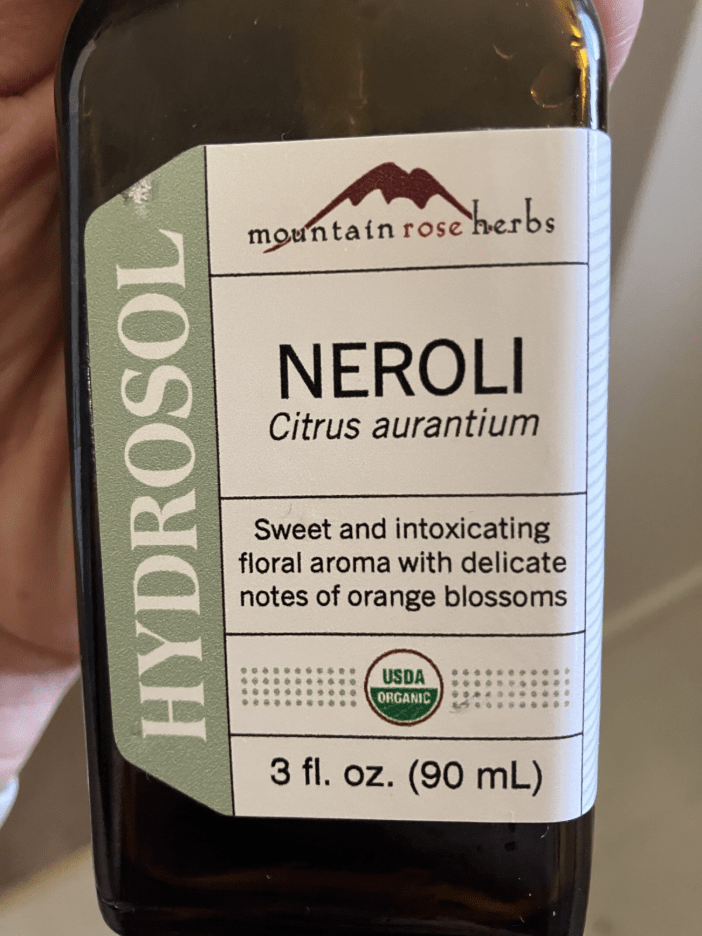
**I am affiliated with Mountain Rose Herbs and could earn a small commission on links to MRH. This does not affect what I share or promote.**

Roots and Blooms

Cherry Blossoms in full bloom

Spring is springing in spurts and gusts as it tends to do in late March. It’s hard not to marvel at the small blooms that not only hold on through the rains and winds, but even seem to thrive on brittle branches and in over damp soil. Spring brings promise, hope, and the kind of surprising beauty that is unbidden, so all the more delightful.

Disorientation

I wish I could say my spirit has been soaring along with the eagles and the heron I regularly see on my morning runs, but the truth is that I can’t shake the feeling of disorientation. The petals and colors of spring do lift me a bit, temporarily, but this moment we are living in is so strange, loathsome on many levels, and angering that it feels like our great big gorgeous earth has tipped over into its own shadow, and the future could go either way.

Honestly, I don’t see anyone thriving at this moment. It seems like everyone is in survival mode where energy is getting stuck in fear and anger, and as much as I try to avoid the trap of anger, I must admit that it’s been a valuable force in my runs lately. Anger is energy and creates adrenaline which feels good in ways, so it’s easy to see why some people get stuck in the trap of cultivating it. It can also trigger feelings of being ‘right’ and ‘better’ than others which creates dopamine, and thus a cycle of addiction. If you have ever found yourself jonesing to get on social media and spout ‘truth’ and argue with others, you have experienced this cycle first hand. I’m not saying anger isn’t warranted, but it’s not a creative force, and if we want a stake in creating the future, our own and/or the collective’s, we need to find a way out of anger and into energy that moves forward.

Moving Forward

It seems to me, that requires digging down and digging in. The blossoms that are surviving the spring winds and rains are rooted in soil and on trees that don’t fret and squander resources. In order to blossom, we too must tap into our roots, what we value, what adds to our life, the small and the big things that could be traditions or are unique specialties all of our own. A small thing for me for example, is when I cook a meal, I feel more like myself. It’s not always what I feel like doing, but when I do it, the satisfaction of the process and product feed me in a way that little else does. The act of creating is so important to feeling fulfilled as a human, that I really do think it’s an essential ingredient in turning survival mode into thriving.

Homemade pizzas
Roasting sweet potatoes, garlic, and leeks
Crust rising for the pizza.

In a further effort to root and bloom out of disorientation, I intend to start making herbal concoctions again now that I am teaching less spring quarter. Although there are many aspects about teaching English to immigrants and international students that I love, there is something deeply exhausting about it for me. Any time in my life that I’ve been teaching a lot of hours, my capacity for creativity has fallen dramatically. Teaching English demands creativity too, but in different ways, heady ways, whereas working with herbs is far more of a sensory experience. The intellectual brain is online, but instead of being a key player, it’s more of a supporting actor, which is where it’s most comfortable in my personal noggin. I haven’t decided what my first creation will be in this new season, but once I decide I will share it here and would love to hear how others are connecting to their creative sides during destructive times.

Cherry Blossoms

The blooms picture above, are cherry blossoms. In the Pacific Northwest, as well as in Japan and in many other places, some of the most famous spring buds are the cherry blossoms, which are not only beautiful, but they are also beautifying. Cherry blossoms are used in beauty products all over the world, such as in Stella McCartney’s Restore Cream which touts cherry blossom extract as its most important ingredient. In Japan, they are not only known as beautiful and beautifying, but also as edible. Cherry blossom tea and specialty foods such as candies, mochi, and preserved blossoms are made in Japan as well as cocktails with the blossoms. The University of Washington’s Seattle campus is a draw for cherry blossom lovers all over. You can watch the live cam of them here.

May your spring be full of all the best blooming 🌸🌿🌷.

Craftivism

Sun rising through winter trees

This term, craftivism, first got my attention 5 to 10 years ago in the form of knitters and embroiders making political statements with their crafts. I think this movement has a bigger mission now, with people turning to crafting in large numbers to ease anxiety, experience flow, and simply create. Creating is such a fundamental aspect of being human, and the opportunities to be creative seem to dwindle each year unless one actively seeks them out. The digital world has brought us many positive aspects, but the more it takes over our days, hours, and lives, the less time we have to create in the physical world around us, and it’s taking a toll.  

Not surprisingly, the Millennials are leading the crafting boom as that generation seems to echo the cycle of the 60s. In the 1960s there was a crafting boom among those in the counter-culture movement to the dominant mass-market thought. It’s also not surprising that the 1950s, the decade when every house had a TV and commercialism and conformity reigned supreme, were then followed by the 1960s with the back to nature movement, homesteaders, and crafters. We’ve now had over a decade of social media with its copycat culture and aspirational nature that has left people wanting something real, something authentic, something that is unique and created by their own hands and informed by their own aesthetic and intuition. We humans crave community, but we also need individuality, and crafting is a small way to get in touch with the parts of ourselves that hold our originality and authenticity.  

Art changes the world, as well as reflects it, and we have a desire to contribute to the world around us. I think it’s taken longer for social media to create the backlash that TV did because TV is completely passive while social media gives a sense of creativity to users. To be fair, some people are indeed creative on the platforms, but most of the time it’s used to scroll through or post imitations of what has already been around thousands of times. There is also the back and forth, so community is mimicked, but it doesn’t have the same fulfilling quality as true community. Having real community, where it’s deeply satisfying to be with one another and exchange thoughts and feelings, embrace challenges and help each other out as we walk and work and play beside each other and with each other through all the ups and downs of life, that’s where real community lies and what our ancient bodies, slowly evolving brains, and connected hearts truly crave. 

In that effort, I’ve seen crafting clubs, maker spaces, and dinner clubs spring up and I love the idea of all those. It gives me hope to see people getting together around making crafts, food, and art instead of participating in the division culture of our time. Bringing people together who might have different beliefs, religions, food choices, perspectives on the world, was a no-brainer not so long ago. Now we live in such divided times where everyone lives within their own curated algorithm, and there seems to be little effort or ability to connect over those digitally mandated lines. Let’s create together once again, and focus on building, connecting, and experiencing fulfilling relationships through community and partnerships. We can honor our individuality and what we uniquely have to offer at the same time as fostering unity. That would be the biggest craftivism rebellion of all, if we all took back our autonomy and creative natures and used them for connection and unity, and it speaks to the smallest actions leading to the biggest changes, because of course they do.  

What do you want to create? 

Happy week of the Lunar New Year🔥🐴! May the Fire Horse brighten our futures and our paths✨. 

Solstice, the Holidays, and Beyond 2025

Juanita Bay

I intended to write yesterday, on Solstice, but as is way too common during the holidays, I ended up fluttering around all day, attempting much and accomplishing little. The busyness and consumerism of this time of year gets to me every single holiday season, and I always envision quiet, simple Decembers full of crafting with evergreen branches and candles, exchanging simple gifts of food, plants, DIYs, and books, and allowing the false hubbub to simply flow around our quiet home while we contemplate firelight. I have yet to create this ideal December, but I intend to, one year, perhaps when I no longer check email daily or need to drive anywhere and fight the crowds heading to shopping centers.  

Simplicity, community, and authenticity call to me more than ever this time of year, maybe because the opposite is so militantly pervasive. I suppose one could argue that the holidays create more community time than other times of the year with people getting together to celebrate, but so much of the buildup to big days are isolating, and generally it’s women doing the majority of the labor. We can all choose at what level we want to participate in the bows and whistles of the season, to a certain extent, but we are community creatures, and it is hard to resist the priorities of those all around us and not mistake them for our own.  

Earlier this month I read Alice Water’s We Are What We Eat: A Slow Food Manifesto, and every word resonated so deeply. The Slow Food Movement encompasses not just how we eat, but also how we think about our world and how we live in it. The book was a warm reminder that there are many of us who want to shape a different reality where the main value resides in quality instead of quantity. If you feel alone in trying to implement sustaining values in your life and in the world, I hope you know, you aren’t alone. The unsustainable drive to want more, at the cheapest prices, as quickly as possible, needs to be challenged.  

This all has me thinking about how we collectively move forward, because the only direction we have to go is toward the future, whether that creates feelings of excitement or dread. Humans have a story-line, and we each choose what to bring with us, what to learn from, and what needs to stay in the past. Things are moving so fast that I understand the need to look at the past and try to recreate it, but that has never worked, and it won’t now. Blindly trying to mimic the past means recreating the past mistakes. Instead, we can intentionally bring the best with us and adapt it to the present moment. Personally, my intention for next year is to craft and cook more, create more communities in my life and others’, and to get clearer on how to follow my own compass and resist the busyness and consumerism that would happily devour us all. 

By the way, it’s probably obvious, but these words are written solely by me, not AI. In fact, the built in WordPress AI has underlined words in this piece that it thinks are too complicated for readers, which is ridiculous and depressing because what if everyone starts following those suggestions and writing gets dumbed down and people lose their ability to read words like ‘forward’ and ‘present? Those are seriously two of the words that are underlined by AI. I do not know how to turn off the AI suggestions that are automatically on here now, so if anyone wants to give me a tech lesson, I would love to hear your expertise! (Expertise is now underlined too. 🙄) 

Happy Holidays! I wish for you peace, joy, health, and fulfillment in the final days of this year, and throughout 2026. See you there! 🌿✨

Herbal Book

Book titled The Apothecary of Belonging

The Apothecary of Belonging by Alexis J. Cunningfolk is a recently published book which I was lucky enough to receive from the publisher to get the word out about it. I was honestly a little shocked when I read the summary of it because it sounded so similar to writing projects I had in the works myself, so I knew this author and I must be on the same page and was excited to read it. From the very first moment I took the book out of the envelope and held it in my hands, I knew we were indeed on the same mission in life, weaving herbs and community together to heal, beautify, and unite. The foundational value system of this book is community and, as the title suggests, belonging. It is delightful in its vintage and artistic touches throughout, and it provides sound herbal knowledge that is both accessible to beginners and affirming to anyone further along their herbal journey. The balance of both charm and depth is reminiscent of herbs themselves, which delight our senses while also providing deep multi-layered healing.

Inner lining of the book
Artistic drawing of roses

It encompasses much more than herbs, incorporating mindfulness, movement, and community rituals which all support the main idea of healing through balance and belonging. Herbalism itself is all about balance, and this book embodies that truth by leading each season with grounding words before moving into more specific herbs and how they can support individuals through those seasons. The physicality of the book may have a vintage appeal, but the words themselves are visionary and aimed at creating a cohesive, community-based future that looks to the past to bring the best of our human history forward and beyond. The overall feel of it is both cozy and thought provoking, hopeful, and action oriented. 

There is talk of magic along with the historical, traditional, and scientific aspects of the herbs, so it is better suited for those with an openness to the powers of nature that are not fully explainable. If you are looking for an herbal book that sticks to the scientific components, there are more compatible books out there. For those who would like an herbal that touches on all aspects of herbalism, including the esoteric, this book would be an excellent addition to your library or to gift to budding nature lovers everywhere.

Fall and winter are such great seasons for making a dent in ‘to read’ lists. So tell me, what are you currently reading or are planning to read during this quieter time of year?

Release Day

Just a quick note before I head off to campus for work that today is the release day of my book in French. I love the French language and this just makes me so happy to see! Here it is on the publisher’s site. It looks like it’s coming to Amazon but I don’t know when. I need to reach out to the publisher and get one myself! Unless I can order it through an independent bookstore which would be ideal.

Enjoy your day!

Thirty a Week and Ultra-processed Foods

There are two trends in healthy eating right now that complement each other nicely. The first is Thirty a Week, with the focus on eating at least 30 different plant foods each week to enhance the microbiome.  

Why has this become a thing? 

Eating a variety of different plant foods means you are giving your microbiome plenty of prebiotics which are essential for helping the good bugs in the gut to prosper and win over the bad bugs, (or too few bugs).  

How to do it: 

Thirty means thirty different plant foods, which can include many categories of food besides the obvious fruits and vegetables. It includes herbs, whole grains, nuts, legumes, and even dark chocolate, coffee, and more. The main point to observe is that if you eat a certain food, such as a Honeycrisp apple, every day at lunch for 5 days in a row, that only counts as 1 of the 30. If instead you eat a different kind of fruit every day at lunch for 5 days straight, then you have 5 out of the 30. There are apps out there to track how many plant foods you eat, if that is your thing, but personally I already have more apps than I care to. For more ideas on how to achieve thirty a week, this linked article is a wonderful place to start.  

How it relates to minimizing ultra-processed foods: 

The Thirty a Week concept works well with trying to get away from ultra-processed foods because when focusing on getting real foods into our bodies, there are less opportunities to choose ultra-processed food. There is more awareness now that ultra-processed foods make up the majority of American diets, (55% is the latest number), and an even larger proportion of youths’ diets. Ultra-processed foods lack nutrition, contain questionable ingredients, are generally packed with excess sugar and salt, and are designed to make people crave foods and overeat. Ultra-processed foods are seen as one of the main reasons if not the number one reason that people are overweight, especially children, and yet unfortunately, they are everywhere.  

What exactly is an ultra-processed food? 

Knowing what is ultra-processed as opposed to simply processed can be tricky. To understand what makes a food ‘ultra-processed’, I am copying this simple explanation from Stanford Medicine’s News Center

  • Unprocessed or minimally processed foods: Examples are fruits, vegetables, beans, nuts, seeds, eggs, meat, poultry, pasta, plain yogurt and coffee. 
  •  Processed culinary ingredients: These include sugar, honey, maple syrup, vegetable oils, butter and vinegar. 
  •  Processed foods: Examples are salted nuts, cured meat, canned fish, canned vegetables, most cheeses and freshly made bread (such as from a local bakery).  
  • Ultra-processed foods: Examples are commercially produced breads, most breakfast cereals, flavored yogurts, hot dogs, frozen meals, potato chips, soft drinks and candy bars. 

As you can see, unprocessed or minimally processed foods are mostly the foods that make up the Thirty a Week guideline.  

The upcoming change of seasons is as good a time as any to commit to healthier, smarter eating. Happy Equinox week! 🥣🌿 

EWG’s Dirty Dozen Updated

Strawberry

The Environmental Working Group (EWG) puts out an updated list of the produce that contains the most toxins each year, as well as the produce that has the least. They test 47 types of produce and the ones that are contaminated with the most pesticides are called the ‘Dirty Dozen’ and the ones that are least contaminated are the ‘Clean Fifteen’.  

These lists are good references when making choices about when to spend more money on the organic version and when to save money by buying conventional produce when it is too expensive to buy all organic food.  

Dirty Dozen as of 2025:  

  1. Spinach 
  1. Strawberries 
  1. Kale, Collard, and Mustard Greens 
  1. Grapes 
  1. Peaches 
  1. Cherries 
  1. Nectarines 
  1. Pears 
  1. Apples 
  1. Blackberries 
  1. Blueberries 
  1. Potatoes 

Clean Fifteen as of 2025 

  1. Pineapples 
  1. Sweet Corn Fresh and Frozen 
  1. Avocados 
  1. Papaya 
  1. Onion 
  1. Sweet Peas (Frozen) 
  1. Asparagus 
  1. Cabbage 
  1. Watermelon 
  1. Cauliflower 
  1. Bananas 
  1. Mangoes 
  1. Carrots 
  1. Mushrooms 
  1. Kiwi 

I like knowing where it is most important to focus my organic-only dollars and appreciate that the EWG updates these lists yearly. It would be ideal if we did not need these lists at all, and maybe if you grow your own food, you don’t, but for the rest of us, the more we know, the better choices we can make.

Eat Well!🍓🍌🌿🍆✨

Herbal Inhalant

My considerate colleague just got back from a trip to Thailand, and she brought us all back these individual herbal inhalant mixtures which is just so unique. It reminds me of old-fashioned smelling salts, although I have no idea what was in those or how they were made, but this is an herbal blend intended to be inhaled when in need of a decongestant. It is incredibly strong, so I imagine it would certainly bring someone back from a fainting spell though or at least help revive them when they start to come to. The ingredients are camphor, menthol, borneol, eucalyptus oil, and, surprisingly, bergamot. 

As soon as I experienced this little treasure, I knew I had to make a version myself! Mine are not perfect, but I wanted to use what I had on hand, so this is what I did for my first go at it.  

DIY:  

I have had a blend called EMC for many, many years, and I believe it is a fragrance oil instead of pure essential oils, which I do not recommend, but since I had it, I wanted to go ahead and use it. 

EMC stands for eucalyptus, menthol, and camphor, which is a common blend not only for inhalants but also for topical pain relief. I used some dried herbs and containers that I already had on hand as well. The herbs are astragalus, because I wanted something woody, rose buds for their soft porousness, and star anise

I filled the containers with the herbs, then dropped about 10-15 drops of the EMC blend right on them, allowing the liquid to penetrate the woody astragalus and soft rose buds.

https://youtube.com/shorts/yL5X0txDQkE?feature=share

The star anise was more to add a bit of its own scent, especially since star anise is traditionally used for immune boosting and other health benefits around cold, flu, and digestive issues.  

The Kentucky tin had peppermints in it at one point, and I have always wanted to use the tin again for something else. Since I will be visiting my family again soon in KY, I thought this would be a suitable time to reuse the container.  

I love how every culture has their own herbal traditions, just as every culture has their own culinary customs. What are some herbal traditions from around the world that you particularly like or find especially unique? 🌿