Nature’s Sweetly Scented Secret: Hydrosols

Sunshine highlighting a path through long, golden grass

I love August’s sun-bleached golden grass. Most people don’t water their lawns here in the Seattle area, and apparently that’s unusual because I’ve had friends visit who positively gasp at the lack of green grass in the late summer. It grows back healthily in the fall, every single year, and considering the PNW’s rainfall the three seasons other than summer, can you blame us for not watering lawns when most of the year our clay soil yards are spongey and puddle filled. The sun works magic here July and August, recently extending its domain late into September and even starting in June some years, like this one.  

I welcome the burnt look of months of unchecked sunshine, but of course there are some downsides. Not being able to go for the smallest walks without sweating is one of them, and the lack of A/C here is another. Even just lazily sitting around inside somewhere near a fan can induce a deep longing for freshness. It is not convenient, or even possible, to shower multiple times a day, so that is where a hydrosol can step in and shine. 

*Hydrosols 

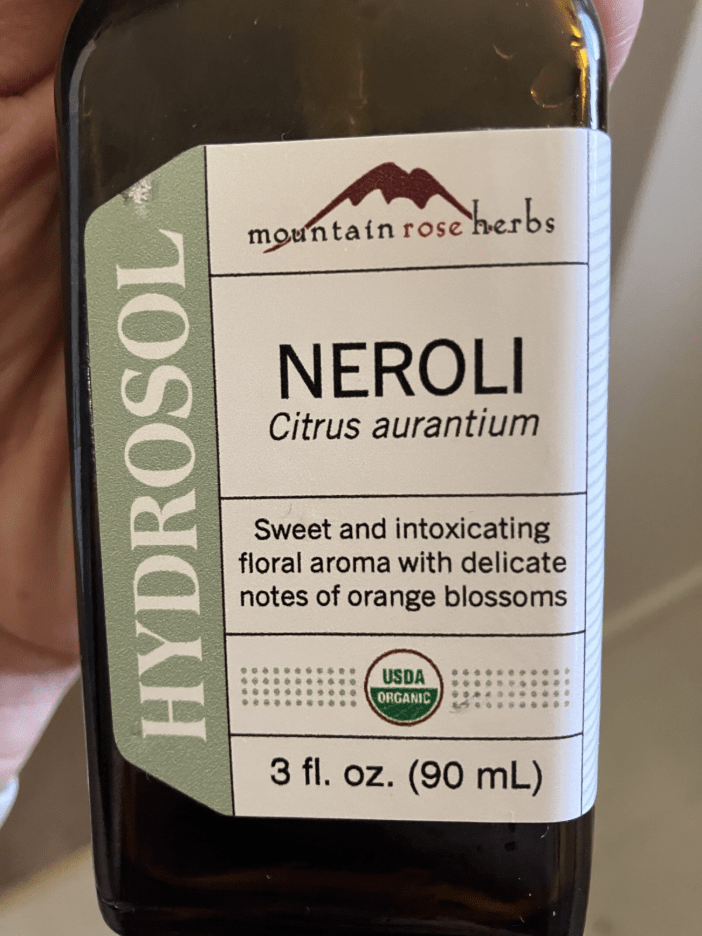
Traditionally made during the process of steam distilling essential oils, hydrosols are purely plant scented water. They are often used to make bath, body, and facial products because they are less concentrated than their essential oil counterparts. Their scent is notably lighter, but still delightfully present, and since they are less concentrated, they can be applied directly to skin. I use witch hazel as a toner, but I often add either rose, neroli, or rosemary hydrosol to the witch hazel for an extra boost. This combination of witch hazel and (any!) Hydrosol is also fantastic for spraying all over the body, or at least exposed parts, to freshen up when a shower is not possible. I keep a small spray bottle of this combination, mine currently consists of rosemary hydrosol, in my desk at work in case I decide to bike there again one of these days. More often though, I spray my face and arms with just a straight hydrosol, right now it happens to be neroli, about every time I go into my bathroom at home. It is a lovely little refresher, lifting my mood and providing a bit of a sweet scent without the heaviness of perfume. (I dab a perfume on my neck and wrists just twice a day during the summer and use a perfume body oil at night before bed.)  

Where to Find Hydrosols 

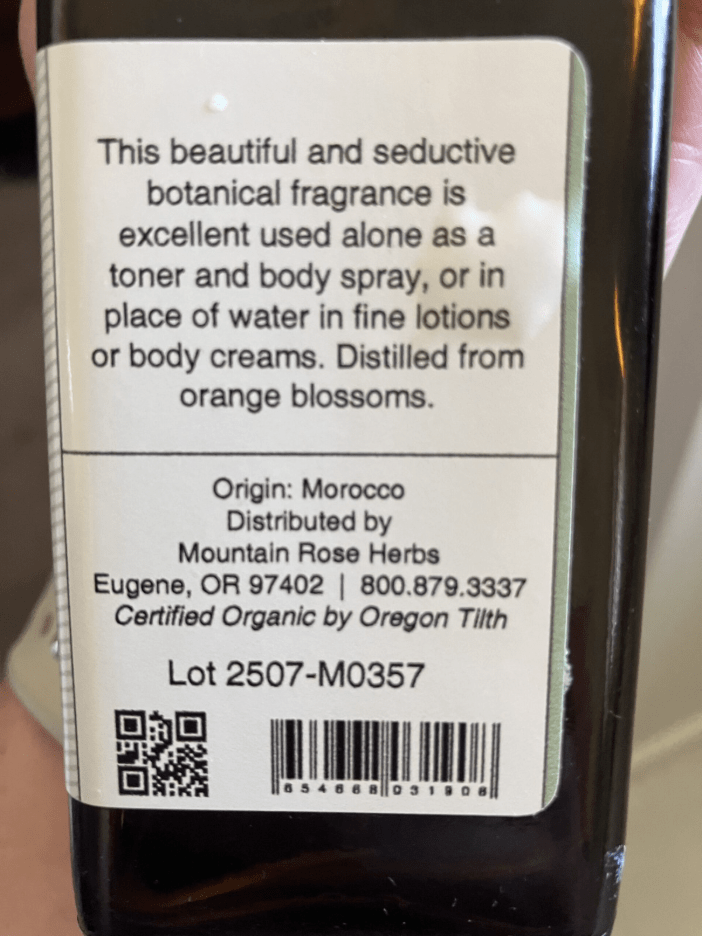
It is a mystery to me why these precious products are hard to find, but alas, they are. Not only that, but there are imposters out there too, so be sure to read the ingredients. Hydrosols are sometimes referred to as floral waters, but floral waters are generally distilled water with essential oils or even fragrance (eek!) added to create the light and bright feel of a true hydrosol.  

I get mine from Mountain Rose Herbs, and they are not only authentic, but they are also organic to boot. They happen to have a 25% off site wide sale happening right now, so if you are in need of any herbs or herbal products, including hydrosols and essential oils, now’s a great time to check them out.  

The photos show my almost empty bottle of neroli hydrosol, so the label has been warped by use and hydration. I am buying some more this weekend which is what sparked this post. 

Stay fresh and live well☀️🌿🌹

*This post includes affiliate links.

Simple Summertime Hack

Sunshine through trees

I realize we are heading toward fall here in the northern hemisphere, but where I live, we are experiencing a late heat wave so sunscreen is still on my mind. Also, it is my understanding that stinging bugs, like bees and wasps, start to get aggressive as summer winds down, so repelling insects remains more important than ever these days.  

Making your own bug repellent is easy and a great way to use all natural ingredients instead of toxic alternatives, but in a pinch it’s really easy to just add essential oils directly to sunscreen before rubbing the mix onto your body. The proportion should be about 2 drops of essential oil into about a tablespoon of sunscreen, with important precautions below.  

You can use just about any essential oil, though some essential oils are more effective than others, all have some repelling qualities to them. Just do not use any citrus oils, meaning orange, lemon, lime, bergamot, grapefruit, or any others that I might be missing. This is because citrus oils attract the sun and can cause hyperpigmentation, which undermines sunscreen. Also be aware that even though peppermint is particularly repelling to bugs, only use one drop in approximately a tablespoon of sunscreen because it is strong and can be irritating to skin. Other essential oils known for being excellent insect repellents are thyme, lemon eucalyptus (not a citrus), citronella, and all of the mints.  

I love Mountain Rose Herbs and have been buying herbs, essential oils, and related supplies for well over two decades, so I am thrilled to partner with them as an affiliate. Not only are they a reputable company with quality products, but they also sponsor my favorite public radio station, KEXP, which has increased my respect for them even more. When you find a company, organization, person, station, etc, that you just resonate with so fully, it’s just such a pleasure to share them with the world. I think these current chaotic times have just made me especially grateful for the like-minded people and organizations out there.

Here’s my short video on the hack that I put on social media:

Subscribe to my YouTube Channel

Happy late summer! ☀️ 

Summer Bug Repellent Reminder

Shady lane on a sunny summer day

In the Northern Hemisphere, it’s that time of year again when longer hours are spent outdoors alongside our insect frenemies. We can’t live without them, but I think we’d all prefer to not be their snack nor their targets for taking out their buzzy ire. If you find yourself particularly tasty to mosquitos or simply irresistible to their more combative cousins, one way to shield yourself from the unwanted attention is to use essential oils. Bugs do not like essential oils, so you can make a body spray or body oil to use daily, or simply add a few drops into your sunscreen or lotion if you are in a hurry as I wrote in the post linked above. Here’s a recap of that post if you don’t feel like clicking through:

Instructions:

To make your sunscreen or body lotion into a bug repelling screen as well, all you need to do is squeeze about a tablespoon of sunscreen into your palm. Add 5 to 10 drops of essential oils into the sunscreen, mix it together, and then lather it on your body. This hack is for your neck down, not your face. Start on the lower end of that 5-10 range, so 5 or less drops of essential oils per tablespoon, to make sure your skin isn’t sensitive and then you can add more drops next time if you wish.

Which Essential Oils?

Almost any essential oil can be used and will be effective, but do not use citrus oils because they can cause hyperpigmentation. Citrus oils are mostly obvious, such as sweet orange, lemon, and lime, with one exception, bergamot. Please avoid these and any other citrus essential oils in your sunscreen. Particularly effective essential oils are citronella (of course!), lemon eucalyptus (not a citrus oil despite the name), thyme, and all the mints but especially peppermint. Be a little cautious with peppermint because it is a cooling essential oil but just as dry ice can burn, so can peppermint at certain levels and everyone’s skin sensitivity level is different. Mixing essential oils is recommended because some bugs are repelled more or less by certain scents, so your end result will be more effective with two, three, or more essential oils.

Make Your Own

If you prefer to make your own dedicated spray and/or oil, which I highly recommend because it is a fun way to scent yourself for summer with the added benefits of less bug bites, I have all the deets on this post (linked) but if you don’t want to click through, here are the most important paragraphs:

Body Oil

One way to take a precautionary measure before even getting dressed in the morning is to apply a body oil with essential oils on your arms, legs, and stomach. To make a body oil, you just need a base oil or a mix of base oils such as sweet almond oil, grapeseed oil, or jojoba oil, and add whichever essential oils you want to wear. Almost any essential oil or blend of essential oils will deter bugs, but especially good picks are lavender, peppermint, thyme, and lemongrass. You will want there to be 5-7 drops of essential oils per 1 teaspoon of base oil. (There are 6 teaspoons in an ounce, so aim for 30-42 drops of essential oils per ounce.) Make sure to shake the mixture before blending, and allow time for the oil to dry before putting your clothes on for the day to avoid oil stains. This can be reapplied throughout the day, but it is probably easier to make a spray for day time reapplication.

Body Spray

To make a bug spray, add essential oils to distilled water with at least a teaspoon of vodka, or use witch hazel instead, in a spray bottle (preferably dark glass) in the same proportion as above, 5-7 drops of essential oils per teaspoon of distilled water and vodka, or witch hazel. You can spray this as often as needed on yourself throughout the day and it will help deter bugs and also provide a nice little scent pick-me-up when you do so. Again, any essential oils will be helpful, but the ones mentioned above would be a great place to start. Of course, citronella is always an option too.

4573EC2A-90F2-4FA1-AEC9-5A5BAE907BA21.jpg

Travel

If you travel with essential oils, as I do, to secure your sleeping area you can put some drops on cotton balls to keep bugs away, especially around open windows or near your bed. I actually like to take a little terracotta diffuser with me when I travel. They are quite small and do not require any heat, so it’s a convenient option. These make cute little gifts as well, and are one way to easily use essential oils in your car or in other places where you don’t have the option to light a candle or use an outlet.

After Care

If you do happen to get bitten or stung by an insect, lavender can be applied neat to the area. Applying essential oils to the body without a carrier is 99% of the time NOT recommended, but lavender is one of the few that can be applied without a carrier and it actually is quite good for burns, bites, and other skin issues. Do use caution if you have sensitive skin though and always assume you do have sensitive skin and start small until proven otherwise.

Thanks for reading and enjoy your bug-free outdoor time! Please share this article with anyone who might be interested in flower powered bug repellent.

In case you missed the links above, here’s more information on making your own body oil: https://botanicalalchemyandapothecary.com/body-oils-diy/ and more details on making a body spray: https://botanicalalchemyandapothecary.com/essential-oil-sprays-for-body-and-home/.

Summer Hack for Repelling Bugs

Sunny day along Juanita Bay

*This post includes affiliate links to Mountain Rose Herbs. I highly recommend their essential oils, herbs, and crafting materials, but use whatever you have on hand first!

A couple of weeks ago my niece mentioned that her sunscreen, which she loves, attracts bugs, which she does not love. I recommended putting essential oils into the sunscreen container because bugs do not like essential oils. I realized later that it’d be more useful to actually add the essential oils right before you put sunscreen on, and an easy hack for anyone who would like some insect protection along with their sun damage protection. I’ll explain how to do just that in a moment, but also want to remind you how easy it is to make your own bug repelling sprays and body oils for when you are heading outside and maybe do not need sunscreen, such as enjoying summer nights out, or you just want to be able to spray yourself repeatedly throughout the day. I have all the details on making your own bug repellent here.

Instructions:

To make your sunscreen into a bug repelling screen as well, all you need to do is squeeze about a tablespoon of sunscreen into your palm. Add 5 to 10 drops of essential oils into the sunscreen, mix it together, and then lather it on your body. This hack is for your neck down, not your face. Start on the lower end of that 5-10 range, so 5 or less drops of essential oils per tablespoon, to make sure your skin isn’t sensitive and then you can add more drops next time if you wish.

Which Essential Oils?

Almost any essential oil can be used and will be effective, but do not use citrus oils because they can cause hyperpigmentation. Citrus oils are mostly obvious, such as sweet orange, lemon, and lime, with one exception, bergamot. Please avoid these and any other citrus essential oils in your sunscreen. Particularly effective essential oils are citronella (of course!), lemon eucalyptus (not a citrus oil despite the name), thyme, and all the mints but especially peppermint. Be a little cautious with peppermint because it is a cooling essential oil but just as dry ice can burn, so can peppermint at certain levels and everyone’s skin sensitivity level is different. Mixing essential oils is recommended because some bugs are repelled more or less by certain scents, so your end result will be more effective with two, three, or more essential oils.

Let me know if you try this and how it works out for you!

Happy Bug Repelling 🐜🚫 and remember, it’s good for the bugs too because if they aren’t bothering you, you aren’t bothering them! ☮

Time to Start DIYing for Valentine’s Day

This site contains affiliate links to products. We may receive a commission or other incentive for purchases made through these links.

There are a lot of options for making your own one-of-a-kind, deeply personal Valentine’s gifts, but I’m partial to perfume body oil. It gets my vote for best DIY Valentine gift because it can also be used as a massage oil for some loving partner time, or bath oil for individual (or shared) self-care tub time. Even if your gift recipient is prickly about baths, massages, and perfumes, they can still rub their feet with the oil before putting on socks and this is a highly effective way for the essential oils to get into the body, and whose feet don’t need some extra love? They could also soak their hands in warm water with the oil which again is another way for the whole body to experience the essential oils and afterwards they can rub their hands with more oil for deep moisturizing after pandemic quality washing and sanitizing for a couple of years now.

Making a body/bath/massage oil is incredibly easy with just base oil(s) and one or more essential oils. It can be made even more healing and complex with first creating an herbal oil, then adding essential oils. Making an herbal oil using the quick method only takes a few hours and is guaranteed to make your house smell divine. I have several tutorials on how to do this, here, and here.

Base oils are fairly interchangeable but there are some I’d recommend over others depending on how the final product will be used. If you think it will be used as a pulse-point perfume, then jojoba or fractionated coconut oil are the best choices. If you don’t have either of those, use sweet almond oil or grapeseed oil. For a full body perfume oil, combining two or more of the oils mentioned above is a great idea. Just using one of those oils will work too, but sweet almond oil and grapeseed oil are going to provide more slip so those two make it easier to cover larger areas than merely pulse points. That makes those two oils ideal for massage oil, and any of the base oils I’ve mentioned will work for a bath oil.

For herbal oils great choices would be lavender, rose, or vanilla, or a combination of two or more of those herbs. As noted above, I have several tutorials on making herbal oils here and here.

So, which essential oils to choose? That’s the easiest part in one way, and also the most daunting in another. It’s easy because any essential oil or combination of essential oils is going to most likely reduce feelings of stress and tension, and help boost feelings of wellness and calm confidence. The only time this might backfire is if the person has a bad experience associated with a certain scent and therefore the scent can trigger feelings of unease. For example, lavender is traditionally known to be calming and relaxing, but if someone went to a lavender farm when they were young and got lost in the fields, separated from their family for long scary minutes, then lavender could easily trigger feelings of distress and alarm on some level for that person for the rest of his/her life. This is fairly rare though and we often know what scents our friends and family gravitate towards. If they are big flower people, pick florals, if they love citrus fruits, pick a citrus, if their favorite thing to do is to hike in the woods, pick pine or cedar, etc. The daunting part can be when trying to decide which essential oils blend together nicely, and for that I’d recommend starting small and starting early, which is why I am posting this a couple of weeks before Valentine’s Day. Use a small container to test the essential oil blend before adding it to the oil, so that way you can see how the blend develops over a few days or weeks’ time, and what adjustments need to be made, such as more top note for more of a lighter initial hit or more base note for grounding, or perhaps more middle note to weave it all together better. I have a few recipe suggestions below but follow your intuition, your nose, and what you know about your gift recipient. Think of this as a truly customized, personal, gift that only you would make for only that one special person. That way what you create will be unique to you and your giftee and both of you will think of the other each time that scent is in the air. Which reminds me, don’t forget to write down your recipe so you can recreate it!

If you are looking for an aphrodisiac combination since this is the holiday that celebrates all aspects of love after all, keep in mind the general effect of any essential oil is to support a calm, confident, and relaxed yet alert state, so any essential oil is truly going to be a good place to start. That being said, some essential oils have traditionally been used for aphrodisiac affects, including the spices such as cinnamon*(see caution), cardamom**, and nutmeg**(see note). Vanilla which is not a true essential oil but can be used in the form of an herbal oil or an absolute. Rose, jasmine, and ylang ylang have sensual reputations as well.

*Cinnamon essential oil can be irritating to the skin. Cinnamon leaf is less so than cinnamon bark, but use either essential oil sparingly in blends and test for sensitivity. ** Cardamom and nutmeg are very potent and easily take over blends, so although they aren’t known to cause the same skin irritation that cinnamon and clove e.o. can, use one drop in a blend at the end of blending, mix, and then test to see if you want to add more. If so, only add one drop at a time, mix, then test.

If you prefer to just buy a ready made oil or body mist with aphrodisiac essential oils already considered in the blend, you might like to check out these two items from Mountain Rose Herbs: a body oil and a body mist. They also have an essential oil Love kit that makes picking out ‘love inducing’ scents easy too.

Here are a couple of recipe ideas to get you started. There are many more recipes in my book, All-Natural Perfume Making, with proposed amounts of each ingredient, so check it out if you like playing with herbs and essential oils. I didn’t suggest amounts for the recipes below so you can truly experience blending with your nose and intuition. Feel free to contact me though with your ideas if you want a second set of eyes.

For a traditionally masculine scent:

Cedarwood, vanilla absolute, bay, and lime in a base of lavender, rose, or vanilla herbal oil

Or

Sandalwood, vanilla absolute, bergamot, and nutmeg in a base of lavender, rose, or vanilla herbal oil

For traditionally feminine scents:

Vanilla absolute, ylang ylang, rose absolute, and cardamom in rose herbal oil

Or

Sandalwood, jasmine absolute, ylang ylang, lavender in vanilla herbal oil or rose herbal oil

Here are more Valentine’s Day DIY projects to consider and here is a post with more information on herbs that support reproductive health, including healthy sexuality.

Wishing everyone rich, deep and layered love this upcoming Valentine’s Day and always ❤.

A Balm for Winter🐾

Here in the Seattle area, 2021 is going out with a bang. This summer we had record breaking heat and in the fall we had record breaking rainfall. Now, this winter is serving us a record breaking cold snap. Maybe 2022 will take it a little easier on the record breaking weather, but in the meantime my dog and I are walking over the snow and ice for two outings a day, and although she’s invigorated by the cold air at first, her paws would start to bother her after walking on the hard ice and having the snow pack into her pads. Someone told me about a balm they put on their dog’s paws before going out in this weather, so I decided to make one for Bailey and see if it helps. Sure enough on the first walk we took where I’d slathered her specially-made-balm on her paws she did great the entire walk! She didn’t stop, lie down, and lick her paws once, and we went for a slightly longer walk than her usual one. The balm is so easy to do too! I didn’t put any essential oils in it because dogs’ noses are just too sensitive for essential oils. If I’d had time to make an herbal oil and turn that into a balm, I would have used lavender buds, rose petals, and/or plantain, but just the oil and beeswax balm worked well. Here’s the (so easy!) recipe:

This site contains affiliate links to products. We may receive a commission for purchases made through these links.

Dog Paw Protective Balm

2 oz almond oil (you can use another oil such as grapeseed or olive oil)

1/8-1/4 cup beeswax (the more wax you use, the harder the balm)

Mix the two together in a double boiler set-up. I use a measuring cup in a pot of water. Turn the burner on medium, making sure the water never boils. Mix the combo occasionally with a chopstick until the beeswax is all melted. Pour into a container and let it cool before capping.

That’s it! For a vegan balm, substitute the beeswax with carnauba wax or use a butter instead, such as shea butter or cocoa butter. The final balm will be softer if using the butters and the waxes provide a better protective barrier so use those if you have them.

Happy New Year Everyone! 🎆May it be a healthy, joyous year of growth and fulfillment for you and all those you love! ✨(Including your furry friends and family, of course🐶🐈🐰).

Yearly Repost about Toxic/Nontoxic Sunscreens

It’s that time of year again when we are bombarded with messages about sun safety and the need for daily sunscreen. That refrain has become a little dissonant lately though with more and more people questioning the ingredients in their sunscreen, with good reason. That ‘protective’ layer can house some awfully hazardous chemicals that have actually started to be researched as potential causes of cancer themselves, as well as having other undesirable qualities such as hormone disruptors, allergy-causing, and skin penetration. To review the specific chemicals and their risk factors, according to the Environmental Working Group (EWG), check out the graph located in their article here. They list oxybenzone as the most hazardous chemical in sunscreens, so it is a good idea to double check that at least that one chemical is not in any of your sunscreen products.

The alternative to chemical sunscreens is mineral based sunscreens which are considered safer. Jessica Rubino, in her article for Delicious Living, explains mineral sunscreens in this way:

Mineral sunscreens use active mineral ingredients, such as zinc oxide and titanium oxide. They reflect the sun’s rays like a mirror to protect exposed skin.

UV protection

When buying sunscreen, protection from UV rays should be your top consideration. In that sense, mineral options take the prize, according to the EWG. Zinc oxide, in particular, delivers the best UVA and UVB protection (also known as broad-spectrum coverage), says Leiba. “Mineral active ingredients don’t break down as readily in the sun, offering greater protection for longer.”

Ingredient safety

Generally speaking, naturally derived ingredients used in mineral sunscreens are gentler than chemicals. Still, some considerations remain. Avoid titanium dioxide in powder or spray form; the EWG claims it’s linked to toxicity when inhaled. Also, it’s worth reading up on nanotechnology, which creates tiny particles that are often used in mineral sunscreens to make them easier to rub in. Since labeling regulations of nanoparticles don’t exist yet, ask manufacturers directly about their policies. EWG maintains that nano in sunscreen is safe, but research continues. (There do exist non-nano mineral sunscreens, such as the one from Babo Botanicals below.)

Appearance

Other than those that use nanoparticles, mineral sunscreens simply don’t rub into skin as well, often leaving a white film. In the quest for mineral sunscreens that apply more evenly, some  companies are trying non-nano ingredients, such as an aloe base and ZinClear, a zinc oxide. If you choose a safe mineral classic, expect to take an extra minute to rub it in.

In another article from Delicious Living, the following nine sunscreens were given the safety rating of 1 (safest!) by the EWG. Compare that to oxybenzone which has an 8 (out of 10) rating and it’s clear these mineral sunscreens are a far safer bet. That being said, I do want to point out that from what I have read and also gathered from my naturopath, people really need half an hour of sun on their faces and bare arms every day, without sunscreen, for proper amounts of vitamin D. Here in the Pacific Northwest, as well as other places around the country and world, proper amounts of vitamin D are not even possible without supplementation because of the lack of sun for many months out of the year. Vitamin D is important for immunity, skin, bone, and mental health, and blood pressure concerns, plus a lack of vitamin D has been implicated in breast cancer and prostate cancer, as well as many other chronic health conditions. Keep this in mind when determining your sunscreen usage. It’s not only important to choose your ingredients wisely, but also to know how to use your products to ensure optimal health. The following are listed alphabetically:

Andalou Naturals All-in-One Beauty Balm, Sheer Tint, SPF 30

andalounatural-sunscreen

With well-rounded complexion protection, Andalou’s BB product not only uses minerals to shield from harmful rays but also to lend a subtle, “sun-kissed” tint to skin. Fruit stem cells and superfruits provide an antiaging and brightening boost, too.

Babo Botanicals Clear Zinc Sport Stick Sunscreen, Fragrance Free, SPF 30

babobotanical-sunscreen

Containing 20 percent non-nano zinc oxide and a cocktail of nourishing botanicals to sooth the skin (think avocado oil and cocoa seed butter), this new launch a clear winner in safe sun care, and the EWG rating agrees.

Badger Unscented Sunscreen Face Stick, SPF 35

badgerfacestick-sunscreen

Badger continues to raise the bar for safe sun care, this time focusing on developing effective nontoxic preservatives specifically for mineral sun care. Badger’s line includes products for the whole family; this easy-to-apply face stick contains 22.5 percent zinc oxide for superior active lifestyle protection.

California Baby Super Sensitive Sunscreen, SPF 30+

californiababy-sunscreen

A brand that has rightfully earned the trust of moms, California Baby once again delivers on baby-centric safety, according to the EWG. Ideal for little ones, this fragrance-free product offers a comfortable application that is also sting-free for the eyes (moms can use it as a gentle-on-the-complexion option, too).

Goddess Garden Everyday Natural Sunscreen Lotion, SPF 30

goddessgarden-sunscreen

A go-to for anyone seeking daily, no-fuss sun protection, this product contains an efficacious blend of zinc oxide and titanium dioxide in a base of soothing aloe leaf juice, shea butter and coconut oil. Plus, it’s organic. A great choice for your body—and the earth.

Hampton Sun Sunscreen Lotion for Baby, SPF 45

hamptonsunforbaby-sunscreen

Another extra-gentle, excellent choice for babies, this product complements its UV-protective mineral blend with soothing chamomile and sunflower oil.

Jersey Shore Cosmetics Anti-Aging Mineral Sunscreen Lotion, SPF 35

jerseyshore-sunscreen

Sun protection is your No. 1 defense against aging. But extra protection is a major boon. Top-rated by the EWG for its UV protection, this SKU also contains vitamins E and D3 for antiaging prowess.

Juice Beauty Sport Sunscreen, SPF 30

juicebeautysport-sunscreen

Tailor-made for an active and beautiful lifestyle: Protect with chemicals, support with plant extracts, antioxidants and vitamins.

Mineral Fusion Mineral Sun Stick, SPF 30

mineralfusion-sunscreen

Mineral Fusion knows what skin needs—and the company is no stranger to delivering it with carefully crafted mineral formulations. This product starts with zinc oxide and titanium dioxide, then gives skin a vitamin and antioxidant boost.

In short, avoid chemical sunscreens, especially ones with oxybenzone in them, and instead opt for mineral sunscreens with zinc oxide and titanium oxide. Also, if you must use a spray sunscreen, only use ones made with zinc oxide, not titanium oxide, because the EWG lists it as unsafe when inhaled in that form. Enjoy the sun and please subscribe for weekly posts about herbs, natural health, and green beauty, and please share with anyone who might benefit from this article.

How-to Posts and Recipes Related to Perfume Making Book

Here are some of the former posts and videos I’ve made that relate to my book, All-Natural Perfume Making. If you are looking for a step by step process from the book that isn’t here, let me know by contacting me!

DIY Herbal Oil Quick Method

Happy Equinox Weekend everyone! I decided to make some video tutorials that correspond with recipes in my book since the pictures aren’t necessarily step-by-step visuals of the process. I haven’t made a how-to video in over a year so this one is pretty rough. I’m feeling inspired to get back into the groove though so it feels significant that I restarted on Spring Equinox. This corresponds to page 94 of my book.

Subscribe to my YouTube Channel

Excerpt from My Book on MindBodyGreen on How to Make All-Natural Solid Perfumes

Solids are a great way to carry a perfume around with you in your bag, especially when traveling, since there aren’t spillage concerns with solids. The excerpt from my book explains how to make an all-natural solid perfume, including vegan options because most solid perfumes use beeswax. Click on the link below or here to see it.

Excerpt of My Book on MindBodyGreen

Happy Crafting! 🌸🌿